
As Seattle prepared to welcome thousands of visitors for a major international soccer event, REST began with one central question: How could we respond effectively within our area of expertise while ensuring survivors had access to safety, support, and practical resources?
Large public events can create additional instability, movement, and safety concerns for people experiencing exploitation. REST knew it was important to prepare for a possible increase in crisis needs while remaining focused on the work we are uniquely equipped to provide.
Months of research, outreach, planning, and coordination created a strong foundation. Still, no response plan can anticipate every person, circumstance, or need. The success of REST’s response came from a team that brought the plan to life and adapted it for each individual who reached out.
Providing Immediate, Individualized Support
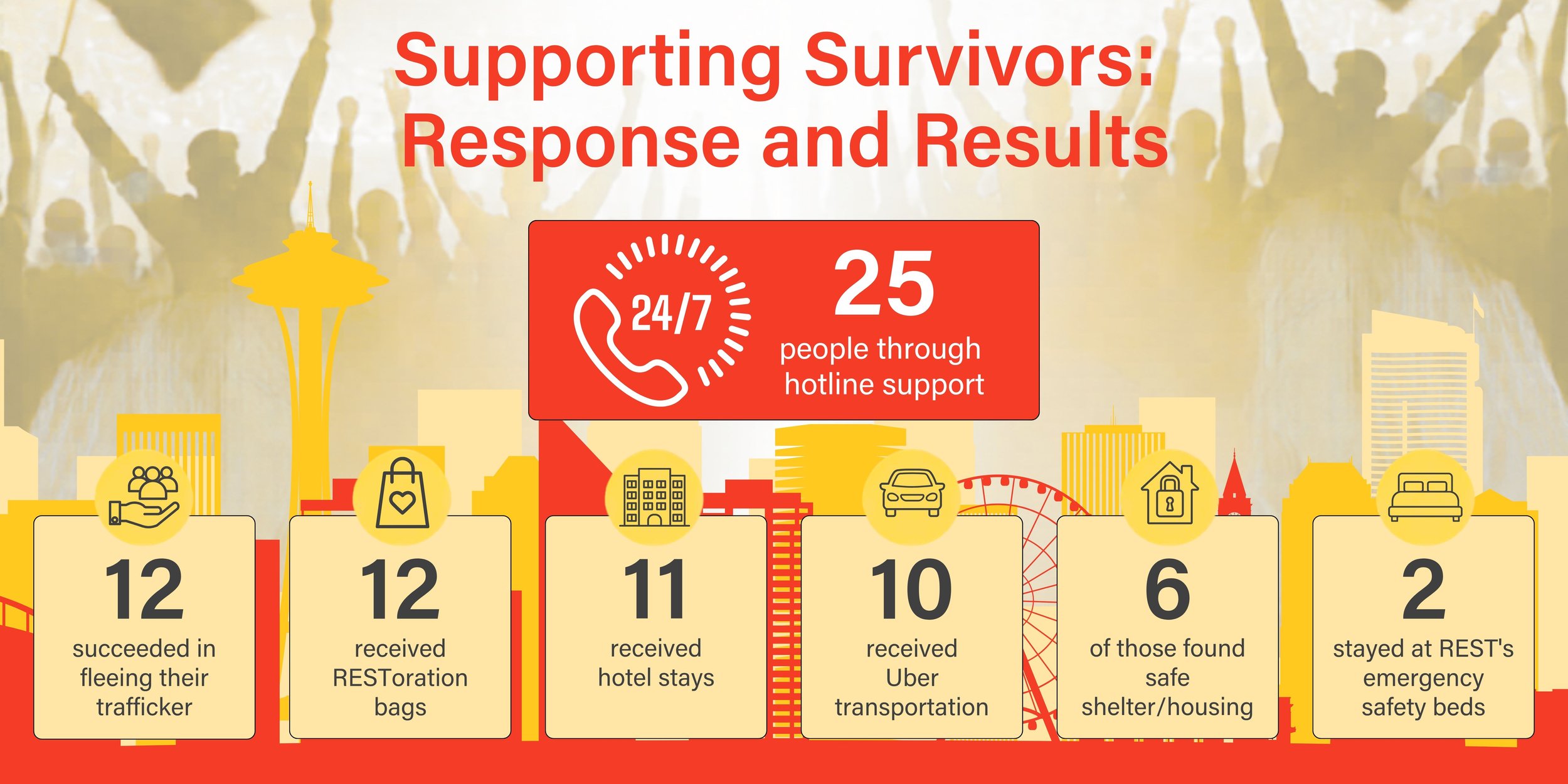
During the response period, REST served at least 25 people through hotline support, field response, emergency lodging, transportation, relocation, and other essential services.
Support provided included:
12 of those succeeded in fleeing their trafficker
12 received RESToration bags
10 received Uber transportation
11 received hotel stays
6 of those found safe shelter/housing
2 stayed at REST's emergency safety beds
For some people, remaining in Seattle was not safe because they could be recognized or located. The team arranged hotel stays throughout the region based on each person’s circumstances and safety needs.
In many cases, staff were able to establish immediate safety and complete the next stage of the plan within 72 hours. Other situations required more time and complex coordination. One individual remained in a hotel for 10 days while staff worked around the clock to find a safe placement in Washington.
Some people had trusted contacts or a safe destination. Others had no one to call or faced significant limitations on where they could go. The team built each plan around the individual rather than requiring the individual to fit within a predetermined response.
Not everyone chose to continue receiving services, but each person received information, resources, and an open invitation to reconnect with REST when they were ready.
Meeting People Where They Were
REST’s field response team met people in hospitals, restaurants, and other community locations before helping them reach safer destinations.
Designated supervisors worked closely with advocates to coordinate lodging, transportation, supplies, and complex relocation needs, including travel outside Washington when necessary.
The team continued following up after people reached their destinations, confirming that they had arrived safely and helping address additional needs.
Safety was not treated as a single ride, hotel stay, or transaction. It was an ongoing process of listening, problem-solving, and remaining connected.
Adapting as Conditions Changed
Before the events began, REST connected with outreach organizations, law enforcement partners, community providers, and groups already serving people in areas where exploitation occurs. These conversations helped the team better understand potential needs and identify how REST could contribute most effectively.
When conditions changed, REST adjusted its approach.
Rather than continuing with every element of the original plan, the team reassessed where staff time and resources could make the greatest difference. Outreach shifted toward connecting with local businesses, increasing awareness of REST’s hotline, and ensuring people knew where to turn for support.
This flexibility allowed REST to remain focused on people actively seeking help while using staff time and donor-funded resources responsibly.
What We Learned
This response reinforced the importance of preparation, trusted partnerships, flexible funding, and the ability to adapt quickly.
The needs that emerged did not always match what had been anticipated, but the team was able to redirect staff and resources where they could have the greatest impact. The experience also highlighted the importance of maintaining a range of safety options because no single placement, service, or location works for everyone.
These lessons will help strengthen REST’s planning for future large-scale events and periods of increased need. They will also help us continue improving coordination, outreach, staff support, and individualized crisis response.
A Team That Brought the Plan to Life
Preparation created the foundation for this response, but REST’s staff made it possible.
Advocates, field responders, supervisors, hotline staff, program teams, and support staff worked long hours and significant overtime to meet urgent and often complex needs. They coordinated transportation, lodging, supplies, relocations, follow-up care, and countless behind-the-scenes details while continuing to center each person’s dignity, choices, and safety.
They adapted quickly, shifted strategies, solved unexpected challenges, and supported one another through demanding days and difficult calls.
“I am deeply grateful for the way our team showed up for every person who reached out. They took a detailed plan and adapted it with care, creativity, and urgency to meet each individual’s needs. Their willingness to work long hours, support one another, and keep survivors at the center of every decision made this response possible.”
Yasminda Dorrough, Director of Survivor Services
To every REST staff member who carried this work forward, thank you. Your compassion, resilience, flexibility, and commitment transformed months of preparation into meaningful support during a critical time.
Following the response period, REST prioritized staff recovery through additional time off and recognition of the overtime required. Caring for the people who do this work is essential to sustaining compassionate and effective services throughout the year.
Community Support Made This Possible
REST’s response was strengthened by the community organizations, outreach teams, service providers, churches, businesses, agencies, and other partners who shared information, coordinated resources, and helped connect people with support.
To every donor and community member who contributed, thank you.
Your generosity helped provide hotel rooms, transportation, cell phones, RESToration bags, food, gift cards, emergency placements, and the staffing required to respond when someone reached out for help.
Flexible donor support was especially important. It allowed REST to respond to needs as they emerged and make decisions based on what was safest for each individual rather than being limited to one location, service, or predetermined solution.
Because of your generosity, the dedication of our staff, and the collaboration of our community partners, REST was able to turn a plan on paper into real pathways to safety, stability, and hope.