

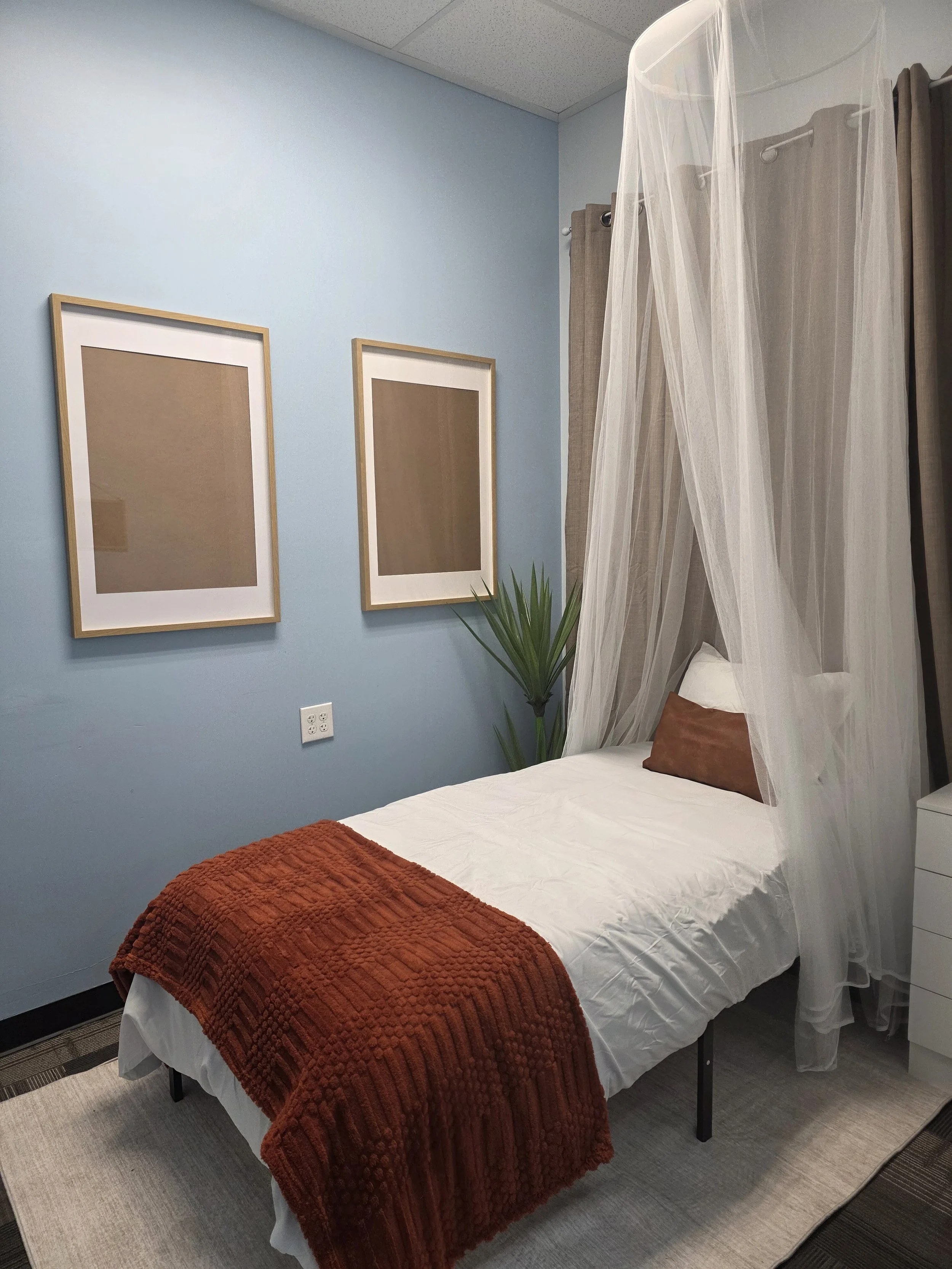
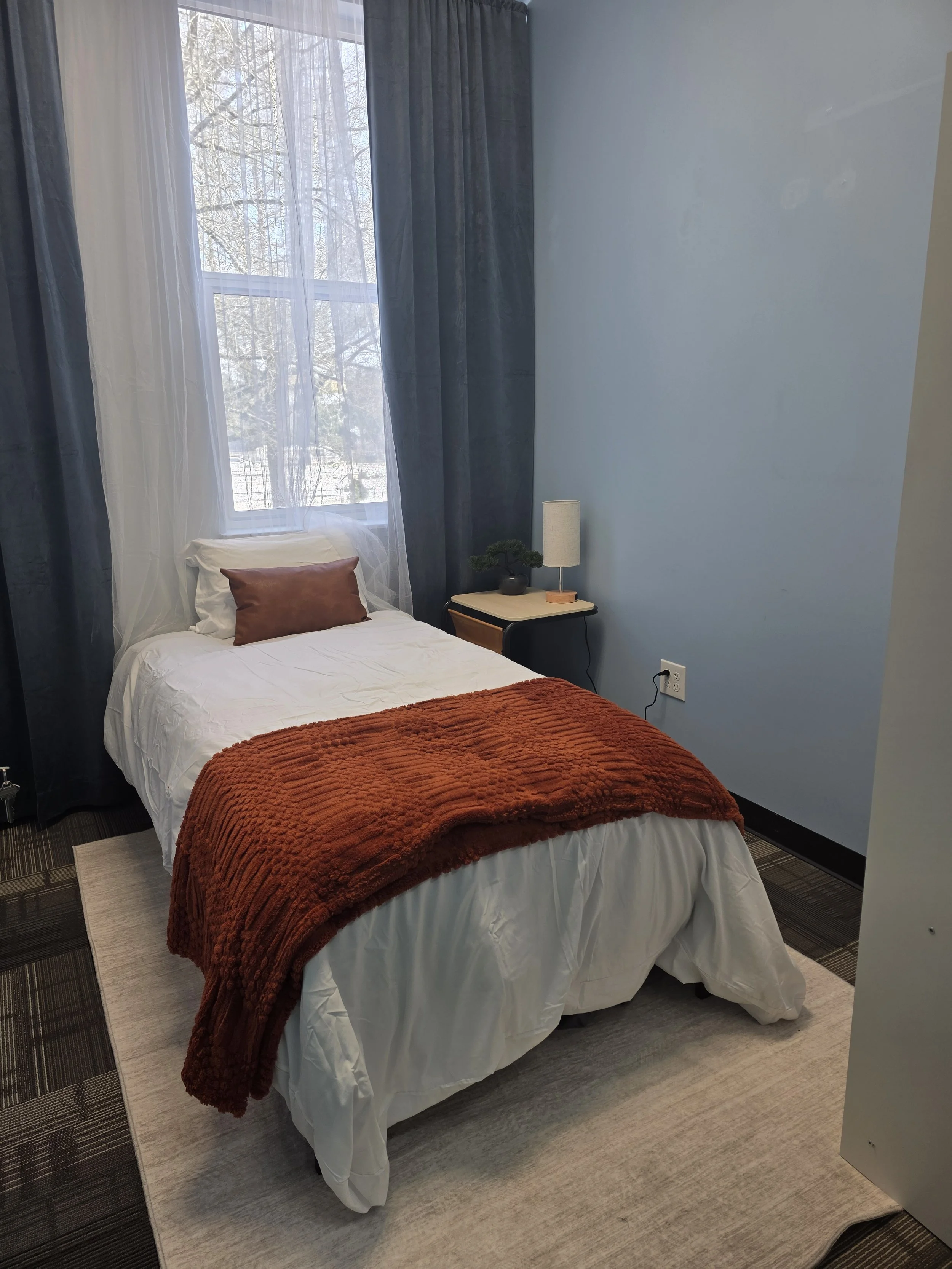
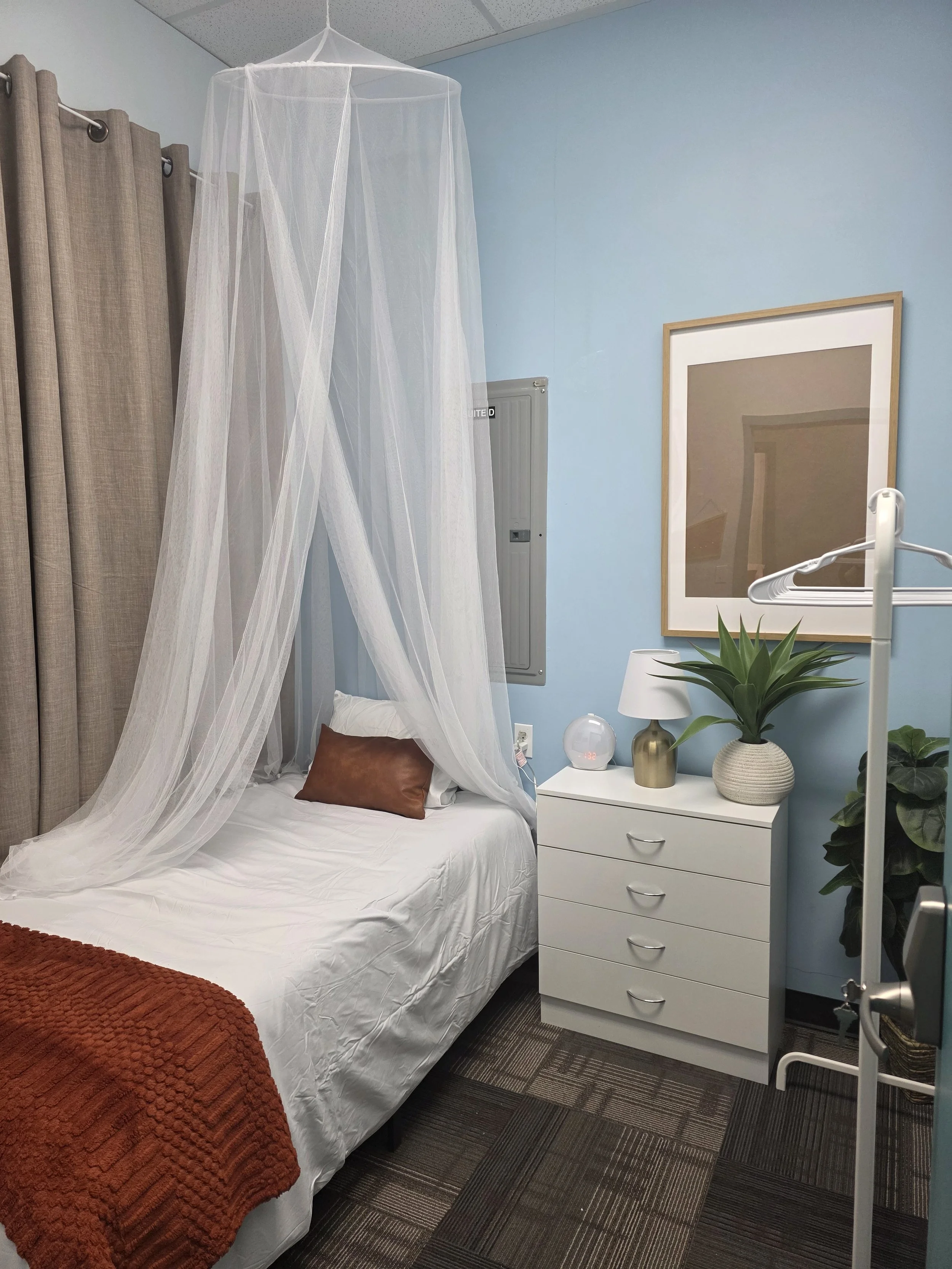
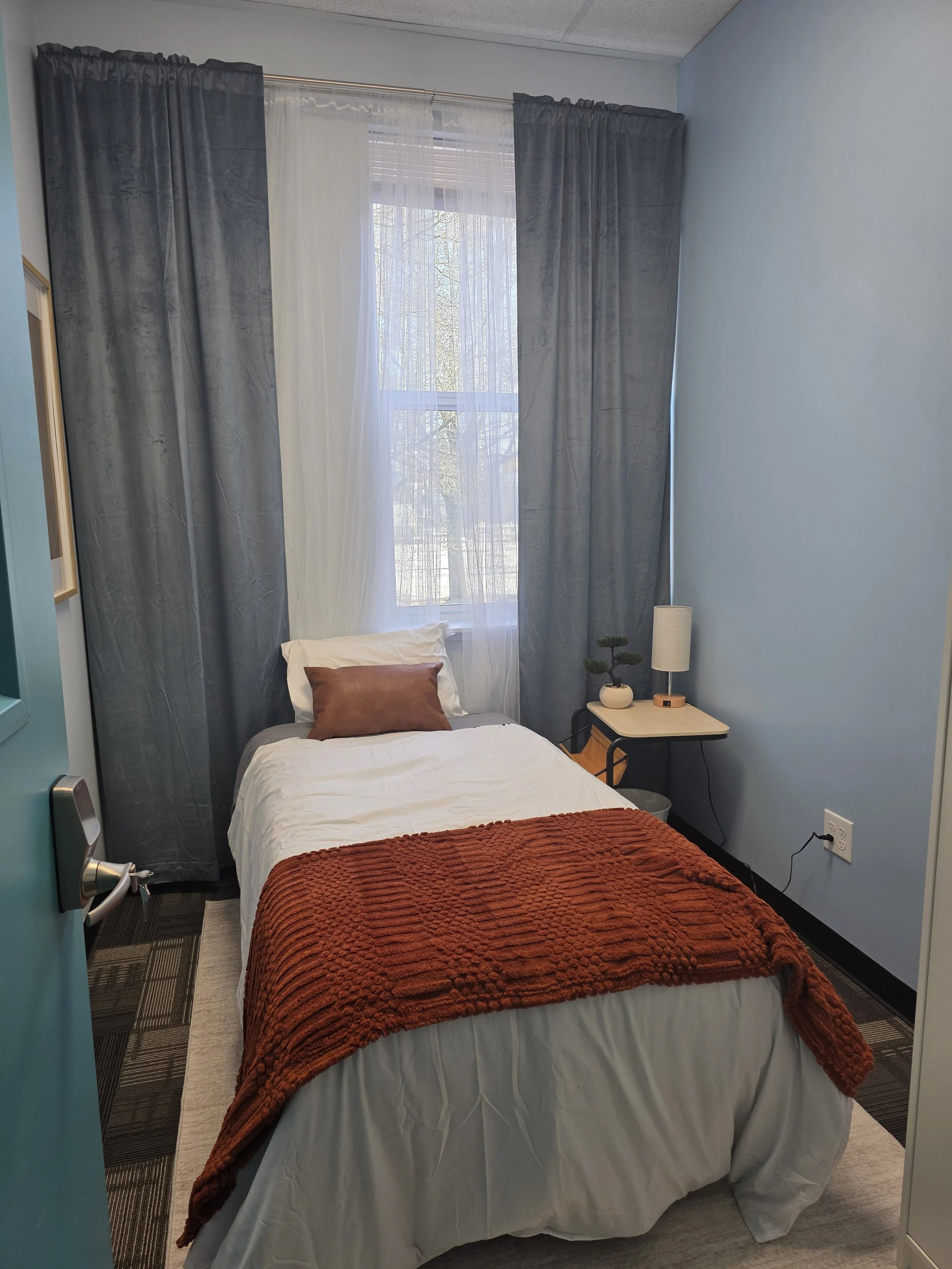

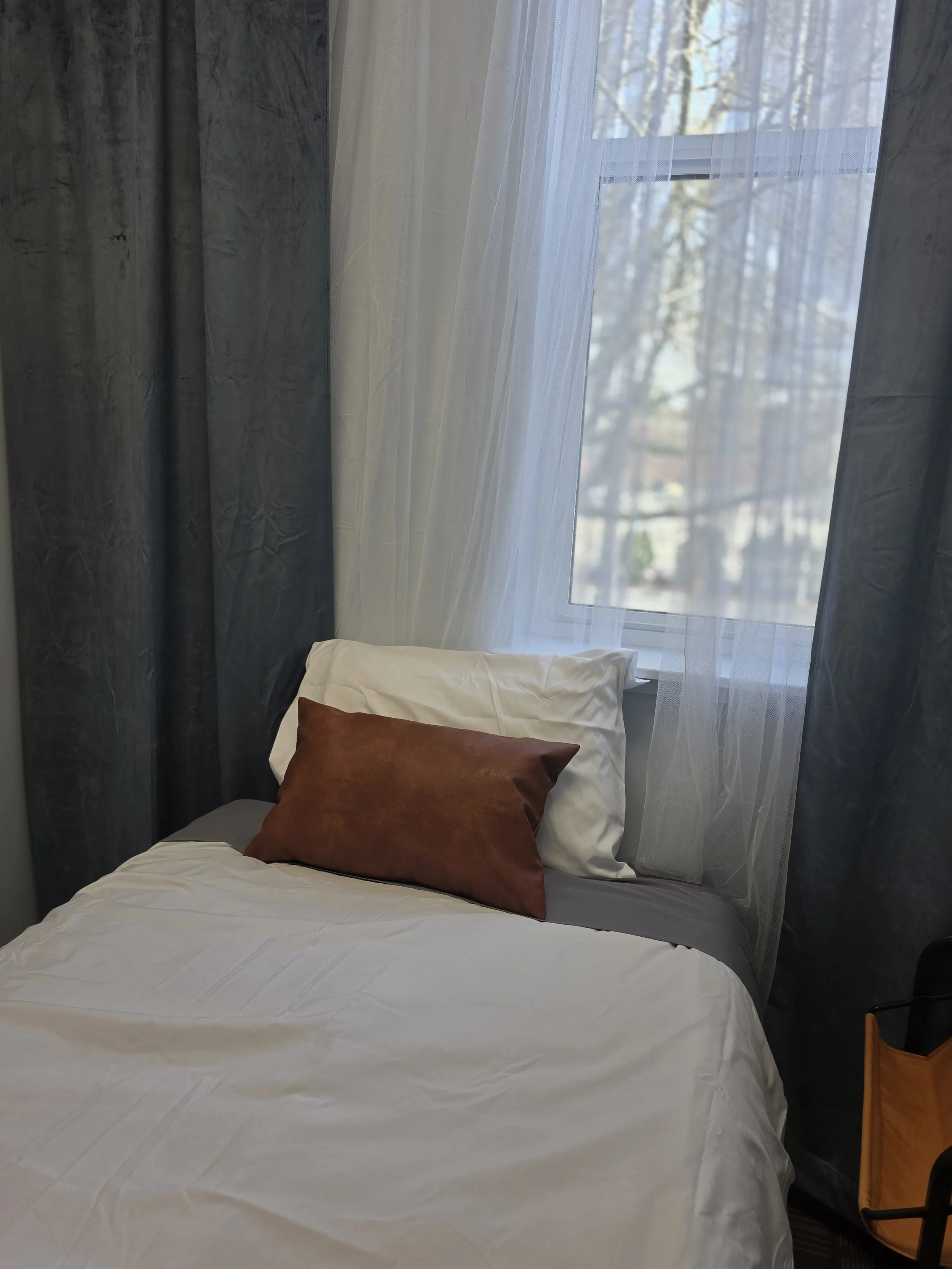



This spring, REST is expanding our shelter capacity from 7 beds to 12 beds thanks to a grant from the City of Seattle.
We are deeply grateful to the City of Seattle for investing in this expansion. This support is helping create more space for survivors to access safety, stability, and compassionate care when they need it most.
That growth matters in a very practical way. It means more space for survivors who need safety, support, and time to move toward their goals. This expansion is also about listening well, choosing language carefully, and creating spaces that feel welcoming, comforting, and full of dignity.
For years, REST’s shelter has offered survivors a safe place to rest, stabilize, and begin to imagine what comes next. As we prepared to grow, we also took a closer look at the name of that space and what it communicated to the people we serve.
For 13 years, we used the name Emergency Receiving Center. Over time, we learned that the phrase “receiving center” carried painful associations for some people, especially around incarceration and foster care. That was difficult to hear, especially because that was never what we wanted this space to evoke. We did not want survivors to hear that name and think of lockdown, mistreatment, or systems that had failed them.
We heard that feedback, and we did something about it.
The acronym ERC needed to have different words behind it. As we considered other options, we thought through what the acronym for the letter “E” could mean like "Early" and "Entry", but neither felt right. “Early” was not accurate, because healing is not always linear and some clients return or need a reset. “Entry” also carried its own associations. What stood out instead was the word “Essential”.
Essential captured what this space really is. It reflects the essential support, resources, and services survivors receive here every day. It reflects care that is immediate, meaningful, and centered on each person’s needs.
That is why REST’s current shelter space will now be known as the Essential RESToration Center (ERC).
It is still ERC, but now the name better reflects what clients have told us this space truly means to them. It is not simply a place to be received in an emergency. It is a place of restoration.
A second space for the next step
Because we already have the ERC, the additional space created through this expansion will be called the RESToration Transition Center (RTC).
This new space includes 5 additional beds and gives us the ability to support survivors in new ways.
Five more beds may not sound like a dramatic increase at first glance, but in practice, it changes a great deal. It means REST can respond more fully in urgent situations, reduce reliance on temporary hotel placements, and create more flexibility for survivors who need both immediate refuge and additional time to stabilize. For survivors in crisis, the difference between no space and available space can be life changing.
Three of those beds are transitional beds for clients moving out of the ERC who need additional time and support. These clients can stay for up to another 90 days, helping ensure they are properly cared for as they continue working toward their goals.
Two of those beds are safety beds. REST is building a crisis team, and these rooms will allow us to respond differently in urgent situations.
That matters. A hotel room may provide temporary shelter, but it does not offer the same feeling of comfort, belonging, and support. Our hope is for these spaces to feel cozy, comfortable, and calm, almost like a spa. We want survivors walking through the door to feel that every detail was created with them in mind.
“From the beginning, the vision for these rooms was to create spaces that feel warm, welcoming, and deeply intentional,” said Yasminda Dorrough, REST Director of Survivor Services. “Every detail, from the names to the design, was chosen to help survivors feel safe, valued, and cared for. I wanted each room to reflect the kind of comfort, dignity, and hope that can support healing, and it has been incredibly meaningful to see that vision brought to life.”
Because healing is shaped not only by services, but also by environment.
As REST CEO Elizabeth Hodges put it, “This expansion is about more than adding beds. It is about creating spaces where survivors can feel safe, cared for, and supported as they take their next steps toward healing.”
Why the room names matter
In the ERC, the names of the 7 rooms were chosen intentionally because we want every client to know they are loved. Over time, we have seen how powerful that can be. The rooms are doing exactly what we hoped they would do. Clients often connect deeply with the name of the room they are staying in and begin to carry that identity with them.
The rooms in the ERC are:
Joy: A space that lifts spirits and reminds you that brighter moments are possible.
Peace: A calm, quiet room designed to help you breathe, settle, and feel grounded.
Courage: A supportive space that honors bravery during difficult transitions.
Vision: A room that encourages clarity, reflection, and imagining a hopeful future.
Faith: A place that offers reassurance and trust in the journey ahead.
Hope: A comforting room that inspires optimism and the belief that change is possible.
Strength: A steady, empowering space that reflects resilience and inner power.
We brought that same intentionality into the RTC:
Transition Rooms
Grace: A gentle, restorative room that offers compassion and space to heal.
Resilience: A room that celebrates perseverance and the ability to rise after hardship.
Harmony: A balanced, soothing space that supports emotional and physical stability.
Safety Rooms
Solace: A comforting room where you can find relief, quiet, and emotional ease.
Serenity: A peaceful, grounding space designed to restore calm and a sense of safety.
These names help set the tone for the experience we want each person to have in our spaces. Warm. Safe. Thoughtful. Human. They reflect the kind of care we want survivors to feel from the moment they arrive.
More than more beds
Expanding from 7 beds to 12 is significant. It means more survivors can access immediate care, more room for stabilization, and more support for those who need a next step after an initial stay.
Operationally, this expansion strengthens REST’s ability to respond in real time. With more beds and more types of shelter space, REST can better meet survivors at different points in their journey, whether they need immediate safety, continued stabilization, or a supported transition forward.
This expansion has also taken many hands and a lot of heart. In addition to the City of Seattle funding that made it possible, volunteers have helped decorate, build furniture, move items and get the bedrooms ready. Their care is helping shape these rooms into places that feel warm, welcoming, and restorative.
REST is currently aiming to launch this expansion in the coming weeks after we bring on the needed additional staff support to ensure survivors receive the quality of care they deserve.
This expansion is more than a milestone for REST. It reflects our commitment to listening, learning, and continuing to build survivor-centered spaces that restore dignity, safety, and hope. With the ERC and the RTC, more survivors will have access to care that is not only immediate, but thoughtful, healing, and designed to support what comes next.